

Understanding the Differences Between FCS, MCS, sHTG & TIP
Triglyceride disorders can have similar features, including elevated triglyceride levels and an increased risk of pancreatitis.
The table below highlights key differences in their causes, triglyceride levels, risks and treatment focus.
FEATURE | 
| 
| 
| 
|
What is it? | Rare genetic disorder | Multifactorial disorder | Clinical condition | Complication |
Cause | Single-gene defect | Combination of genetic predisposition and secondary factors | Multiple possible causes (genetic or secondary) | Triggered by severe elevation in triglycerides |
Triglyceride Levels | Usually > 1,000 mg/dL | Often > 500 mg/dL | ≥ 500 mg/dL | Usually occurs with very high TGs (often > 1,000 mg/dL |
Pancreatitis Risk | Very High | Elevated | Elevated | Active pancreatitis event |
Typical Onset | Childhood or adolescence | Adulthood (varies) | Any age | Acute episode |
Treatment Focus | Very low-fat diet, specialized therapies, lifestyle | Address genetic + secondary factors, medications, lifestyle | Lifestyle changes, treat underlying causes, medications | Medical treatment of acute pancreatitis, prevent recurrence |
This comparison is intended for educational purposes only and provides a general overview of triglyceride disorders. Individual symptoms, disease presentation, and treatment approaches may vary. This information should not be used to diagnose any medical condition. Please consult your healthcare provider regarding your specific situation.
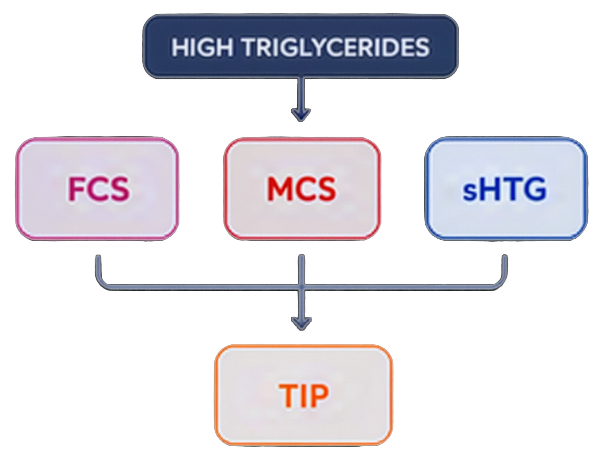
How Are These Conditions Related?
Questions to Ask Your Healthcare Provider
About Diagnosis
About Treatment
About Risk
About Family

Familial Chylomicronemia Syndrome
A rare, inherited disorder in which the body cannot properly break down triglycerides, leading to extremely high blood fat levels and a high risk of recurrent, potentially life-threatening pancreatitis.

Multifactorial Chylomicronemia Syndrome
A disorder in which a combination of genetic predisposition and secondary factors, such as diiet, diabetes, medications, or alcohol, leads to markedly elevated triglyceride levels and an increased risk of pancreatitis.

Severe
Hypertriglyceridemia
Characterized by very high levels of triglycerides in the blood (typically ≥500 mg/dL), increasing the risk of acute pancreatitis and contributing to cardiovascular disease.

Triglyceride-induced
Pancreatitis
An acute inflammation of the pancreas caused by extremely elevated triglyceride levels, often requiring urgent medical care and carrying a risk of serious complications.
Sources & References
- Bashir B, Ho JH, Downie P, et al. Severe Hypertriglyceridaemia and Chylomicronaemia Syndrome: Causes, Clinical Presentation, and Therapeutic Options. Metabolites. 2023;13(5):621.
- Spagnuolo CM, Wang J, McIntyre AD, et al. Comparison of Patients With Familial Chylomicronemia Syndrome and Multifactorial Chylomicronemia Syndrome. Journal of Clinical Endocrinology & Metabolism. 2025;110(4):1158-1165.
- ClinicalTrials.gov
- National Institutes of Health (NIH)